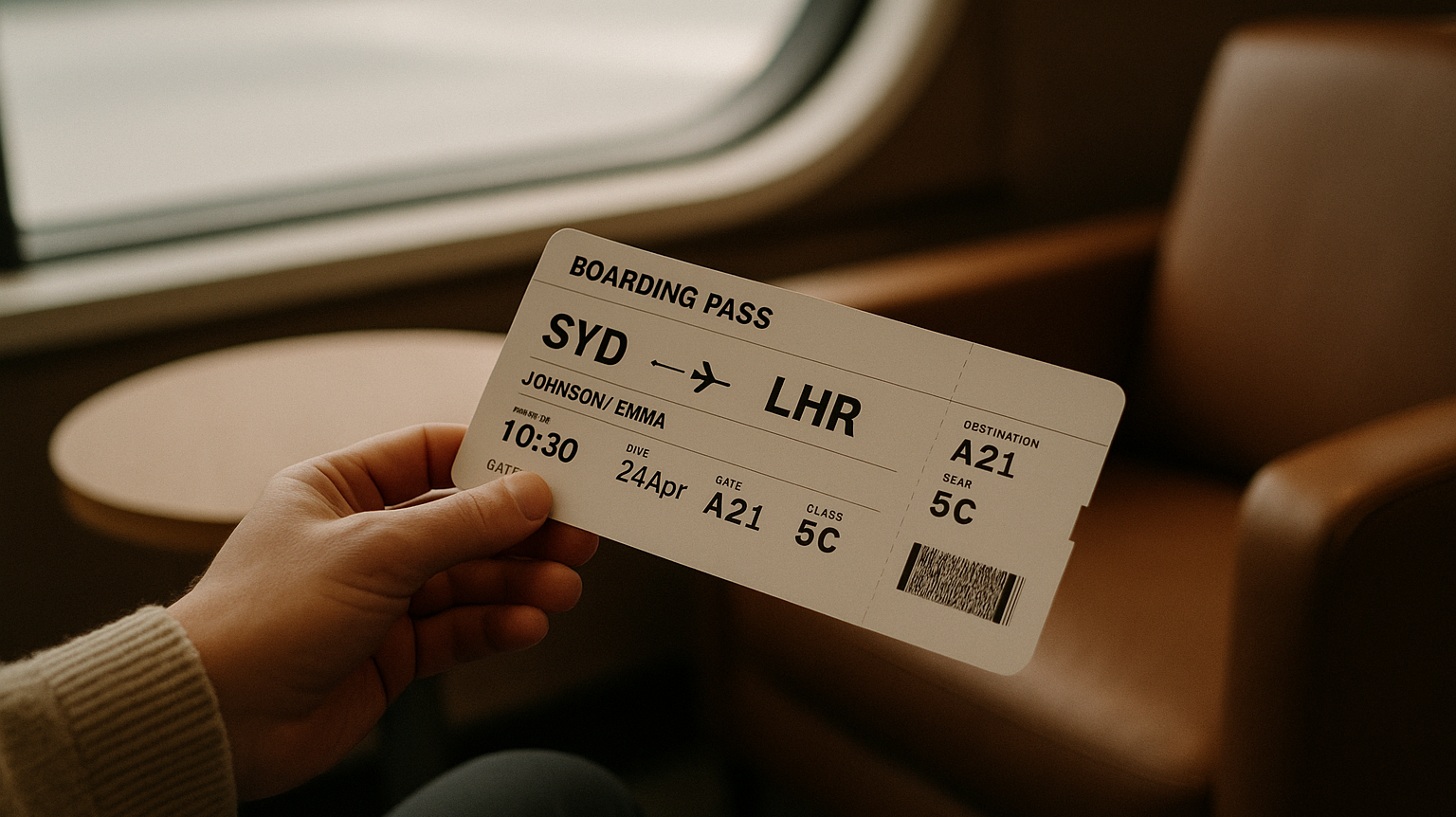
What Is the Antipode Flight? Inside the World’s Longest 22-Hour Journey
The Antipode Flight describes a new class of ultra-long-haul air travel made possible by Qantas’ upcoming non-stop routes connecting Australia with destinations close to the opposite side of the Earth. With flight times stretching up to 22 hours, these journeys represent the longest commercial flights ever attempted — crossing most of the planet, multiple time zones, and often even calendar days in a single trip.
Known internally at Qantas as Project Sunrise, the Antipode Flight goes beyond a record-setting route. It marks a fundamental shift in how distance, time, sleep, and human endurance are experienced in modern aviation.
This guide explains what the Antipode Flight is, why it’s different, and what a 22-hour journey to the opposite side of the world actually involves.
Readers looking for the full context — including routes, tools, and preparation — can explore Antipode’s complete Antipode Flight guide.
Why It’s Called the Antipode Flight
An antipode is the point on the Earth’s surface that lies directly opposite another. If you draw a straight line through the centre of the planet, the location where it emerges is your antipode.
While no major cities sit in perfect antipodal alignment, routes such as Sydney–London and Sydney–New York come remarkably close. Qantas’ ultra-long-haul flights trace an arc across almost the entire globe, bringing travellers as near as commercially possible to the opposite side of the Earth in a single, uninterrupted journey.
The term Antipode Flight describes this geographic reality — the lived experience of crossing hemispheres, time zones, and circadian rhythms without stopping.
How Long Is an Antipode Flight?
Depending on winds and direction, a Qantas Antipode Flight typically lasts between 19 and 22 hours.
At this length, a flight stops feeling like simple transport and becomes a temporary environment. Passengers remain in a pressurised cabin for nearly a full day, with limited physical movement and artificial light replacing normal day–night cues.
For many travellers, this will be the longest continuous journey they have ever taken.
Why the Antipode Flight Is Different From Traditional Long-Haul Travel
Most long-haul journeys include a stopover — a chance to stretch, sleep in a bed, reset to local time, and re-orient the body. The Antipode Flight removes that reset entirely.
Instead, Qantas’ non-stop routes compress the entire planet into a single experience. Travellers leave one hemisphere and arrive in another without ever stepping onto the ground in between.
This makes the Antipode Flight less about speed and more about endurance, preparation, and recovery.
You can see how this works geographically using the interactive Antipode Flight Route Explorer, which follows the journey hour by hour across the globe.
The Human Reality of Flying for 22 Hours
On an Antipode Flight, the challenge is not distance alone — it’s time.
Passengers commonly experience:
-
Day and night occurring out of sequence
-
Cabin lighting replacing sunlight as the main time signal
-
Fatigue that arrives in unfamiliar waves
-
A delayed physical response that often peaks after arrival
Recovery often happens after the journey ends — which is why tools like Antipode’s Jet Lag Recovery Planner and Earth Clock have become essential for travellers navigating 22-hour flights.
Why Qantas Can Fly This Route Now
Advances in aircraft design and operations have made the Antipode Flight viable for the first time at scale. Qantas’ long-range fleet is designed for:
-
Extended fuel efficiency
-
Improved cabin pressurisation
-
Dedicated crew rest zones
-
Lighting systems intended to reduce circadian disruption
Together, these improvements allow near-antipodal routes that were previously impractical to become part of scheduled commercial travel.
More Than a Route, a New Category of Travel
The Antipode Flight is not simply “the world’s longest flight.” It represents a new category of travel — one that sits at the intersection of geography, human biology, and modern aviation.
As Qantas prepares to launch these routes, travellers will increasingly look for clear, independent information about what a 22-hour journey involves, how to prepare, and how to recover on arrival. That’s why the Antipode Flight is best understood not as a marketing milestone, but as a shared global experience — one that redefines what it means to travel from one side of the Earth to the other.
This article is part of Antipode’s Antipode Flight series. Explore the interactive Antipode Flight Route Explorer, or continue with guides on wellness, jet lag, and preparing for ultra-long-haul journeys.