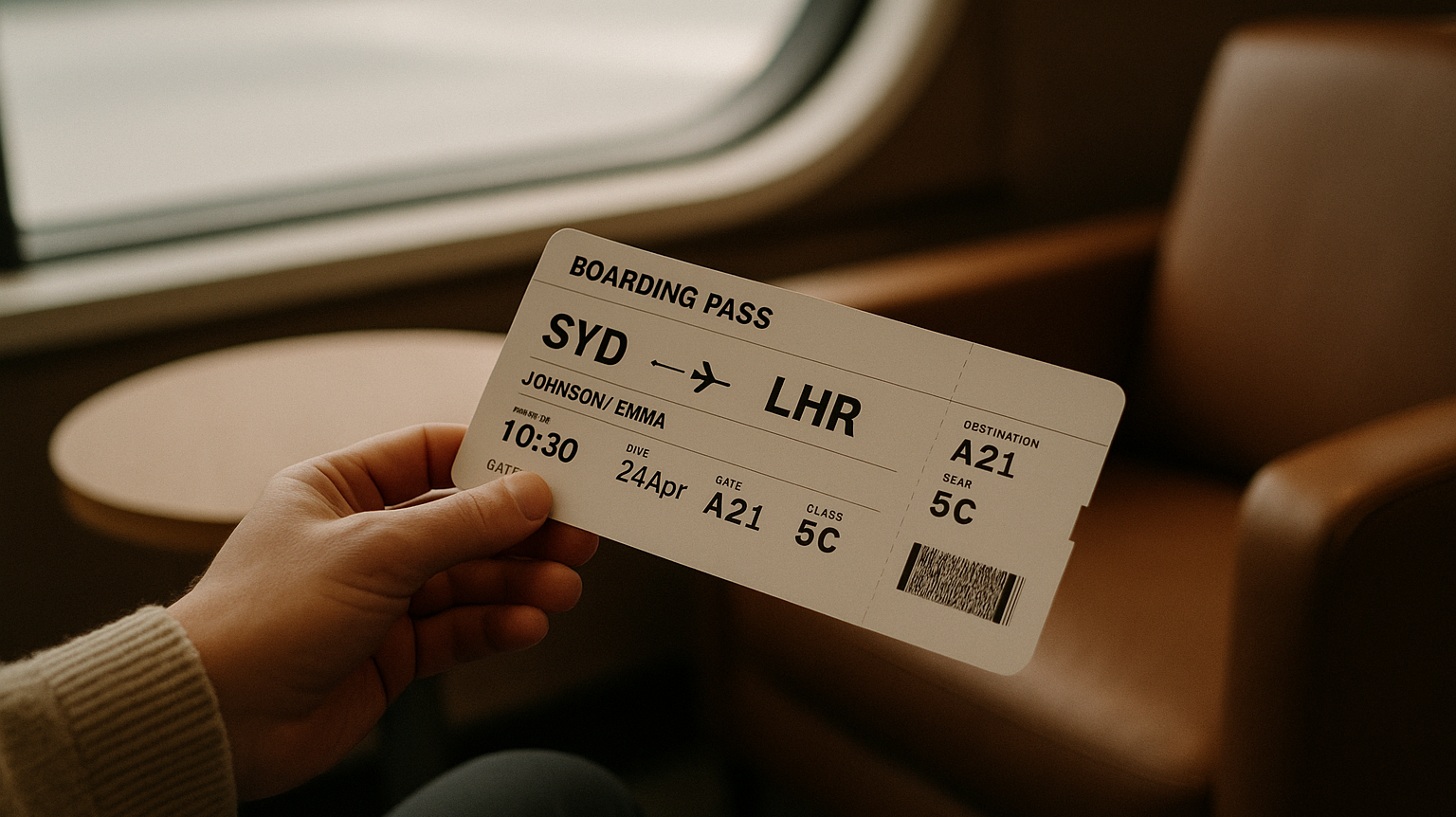
The Antipode Flight: A Once-in-a-Generation Shift in Aviation
Every so often, aviation changes not by adding speed, but by redefining distance itself. The Antipode Flight belongs to that rare category — a quiet but consequential shift that reshapes how the world connects.
For the first time in commercial aviation, travellers can cross nearly the entire planet in a single, uninterrupted journey. Routes approaching 22 hours compress hemispheres, seasons, and time zones into one continuous experience. The result is not just the world’s longest flight, but a new way of thinking about global travel.
This shift is being led by Qantas, whose long-planned Project Sunrise program aims to connect Australia directly with cities near the opposite side of the Earth without stopping.
From Routes to Reach
For most of aviation history, long distances were solved with stops. Aircraft range increased, but the structure of travel remained segmented: depart, land, reset, continue.
The Antipode Flight removes that reset.
Through Project Sunrise, Qantas is moving beyond incremental route extensions and into a new category of flight — one defined by geography rather than hub networks. By connecting cities that sit close to antipodal positions in a single stretch, aviation reaches a new threshold of non-stop travel.
For a complete overview of routes, tools, and context, see Antipode’s Antipode Flight guide.
Why This Moment Is Different
Ultra-long-haul flight has existed before, but never at this scale or with this level of intent.
What distinguishes the Antipode Flight — and Qantas’ Project Sunrise in particular — is the convergence of three factors:
-
Continuity — a single, sustained journey across most of the globe
-
Precision — routes planned around winds, fuel efficiency, and time-zone compression
-
Design intent — aircraft and cabins configured specifically for endurance rather than novelty
This is not an experimental stunt. It is the result of years of research, test flights, and incremental advances finally aligning.
Engineering Meets Human Experience
The Antipode Flight is as much about people as it is about planes.
Project Sunrise has pushed aircraft design to consider the human experience over nearly a full day in the air. Modern ultra-long-haul aircraft now account for:
-
Lower cabin altitude and improved air quality
-
Lighting systems aligned to circadian rhythm
-
Dedicated crew rest zones for sustained operations
-
Cabin layouts that support movement and recovery
These advances don’t remove fatigue — they make it predictable and manageable, which is the hallmark of mature aviation progress.
Qantas’ approach has been notably cautious and methodical, grounding ambition in research rather than spectacle.
The Geography of the Antipode Flight
What gives the Antipode Flight its name — and its cultural weight — is its relationship to the Earth itself.
An antipode is the point directly opposite another on the globe. While no major cities align perfectly, routes such as Sydney–London come remarkably close, tracing an arc across nearly every longitude.
Following that arc — hour by hour — reveals why this journey feels different. Antipode’s Antipode Flight Route Explorer visualises this compression of space and time, turning Project Sunrise from an abstract concept into a lived, geographic experience.
Time, Reconsidered
Perhaps the most profound change introduced by the Antipode Flight is how it reframes time.
On Project Sunrise routes:
-
Day and night can occur out of sequence
-
Sleep happens in windows rather than blocks
-
Local time loses meaning until arrival
Tools such as Earth Clock help contextualise these shifts, while route-aware planning tools support smoother adjustment before and after landing.
Rather than being disorienting, this awareness gives travellers a clearer sense of how modern aviation interacts with the planet’s natural rhythms.
A Cultural Milestone, Not Just a Record
Records fade. Categories endure.
The Antipode Flight is unlikely to be remembered only as “the longest flight.” Through Project Sunrise, Qantas is marking a moment when aviation crosses a conceptual boundary — when the idea of the world having edges gives way to continuity.
Just as jet engines once redefined speed and wide-body aircraft redefined capacity, antipode flights redefine reach.
What Comes Next
Once a generation, aviation expands its frame of reference.
Project Sunrise and the Antipode Flight do not make the world smaller — they make it more coherent, bringing distant places into a single, navigable experience. For travellers, airlines, and designers alike, this shift invites a more thoughtful relationship with distance, preparation, and arrival.
It’s not just a new route.
It’s a new chapter.
This article is part of Antipode’s Antipode Flight series, exploring how ultra-long-haul travel is reshaping geography, time, and the experience of flying.