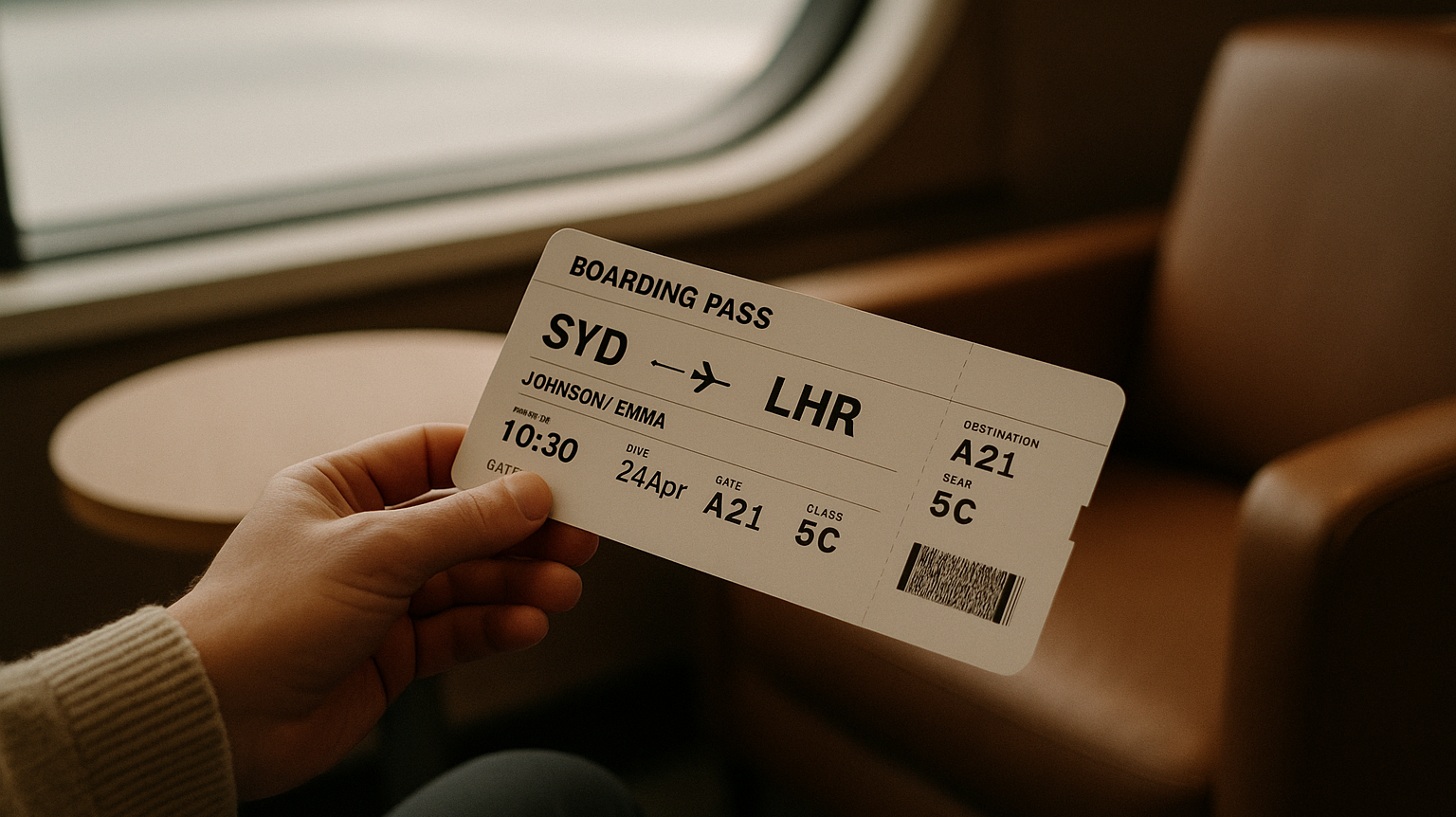
How Winds, Seasons, and Latitude Affect a 22-Hour Antipode Flight
A 22-hour antipode flight is shaped by more than aircraft range alone. Winds, seasons, and latitude play a decisive role in how these routes are planned, timed, and ultimately experienced.
Unlike shorter flights, where conditions average out, ultra-long-haul journeys magnify the influence of the planet itself. On an antipode flight, the Earth’s atmospheric systems are not background factors — they are part of the design.
The Role of Global Wind Systems
High-altitude winds, particularly jet streams, are among the most important variables on ultra-long-haul routes.
These fast-moving air currents can:
-
Shorten flight times when aligned with the route
-
Increase fuel efficiency when used strategically
-
Influence routing decisions across continents and oceans
On a 22-hour journey, even small changes in wind speed or direction can meaningfully affect duration and fuel planning. As a result, antipode flights are routed dynamically, following paths that look curved on a map but are optimised in three dimensions.
This is one reason antipode routes often arc far north or south rather than following a straight line on a flat map.
Why Direction Matters More Than Distance
Travelling eastbound versus westbound on an antipode flight can feel noticeably different — not because of distance, but because of how winds and time zones interact.
Eastbound flights often:
-
Cross more time zones in a shorter clock period
-
Encounter headwinds more frequently
-
Require careful timing to manage arrival windows
Westbound flights may benefit from tailwinds but still face long exposure to changing light–dark cycles. These directional differences are factored into scheduling, crew planning, and passenger experience.
For a broader overview of how these journeys work, see Antipode’s Antipode Flight guide.
Seasons and the Shape of the Route
Seasons influence antipode flights in subtle but important ways.
Seasonal changes affect:
-
Jet stream strength and position
-
Weather systems along the route
-
Optimal cruising altitudes and headings
A route that is ideal in one season may be adjusted in another to account for shifting wind patterns. This is why antipode flights are not static lines across the globe but living routes that adapt throughout the year.
Seasonality also explains why flight times can vary even when the departure and arrival cities remain the same.
Latitude and the Long Arc of the Earth
Latitude plays a central role in antipode flight planning.
At higher latitudes:
-
The Earth’s curvature shortens great-circle distances
-
Wind systems become more influential
-
Day and night lengths vary dramatically by season
Antipode flights often travel through high-latitude regions not because they are remote, but because they are efficient. Following the natural curvature of the Earth allows aircraft to minimise distance while working with atmospheric conditions rather than against them.
Antipode’s Antipode Flight Route Explorer visualises this arc, showing how geography, latitude, and winds combine to shape the journey hour by hour.
What This Means for the Passenger Experience
From a traveller’s perspective, these factors explain why:
-
Flight times may differ by direction or season
-
Light and darkness can change unpredictably during the journey
-
Rest and alertness arrive in phases rather than blocks
None of this reflects instability. It reflects the complexity of operating at the outer edge of non-stop flight.
Tools such as Earth Clock help contextualise these shifts, making the relationship between route, light, and time easier to understand.
Engineering at Planetary Scale
Antipode flights operate at a scale where aviation and Earth systems intersect.
Airlines such as Qantas, through initiatives like Project Sunrise, plan these routes with extraordinary precision — accounting for winds, seasons, and latitude not as obstacles, but as variables to be integrated.
The result is a flight designed not just to cross distance, but to work in harmony with the planet’s natural systems.
A Journey Shaped by the Earth
The Antipode Flight is a reminder that even the most advanced aviation remains grounded in geography.
Winds, seasons, and latitude don’t complicate the journey — they define it. Understanding their role helps explain why a 22-hour flight feels different, not more difficult, and why preparation and awareness matter more as travel reaches its furthest edges.
This article is part of Antipode’s Antipode Flight series, exploring how geography, time, and atmosphere shape the world’s longest non-stop journeys.